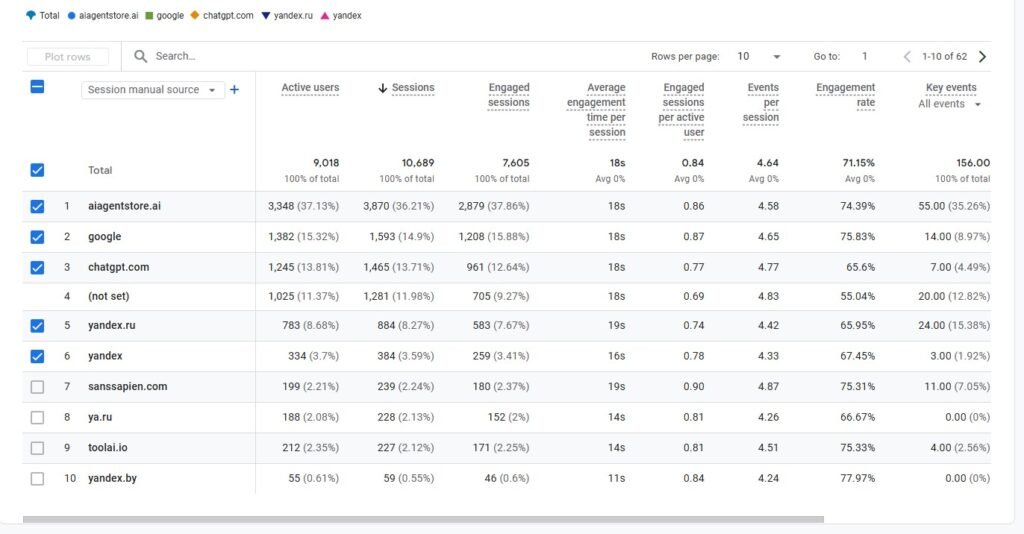
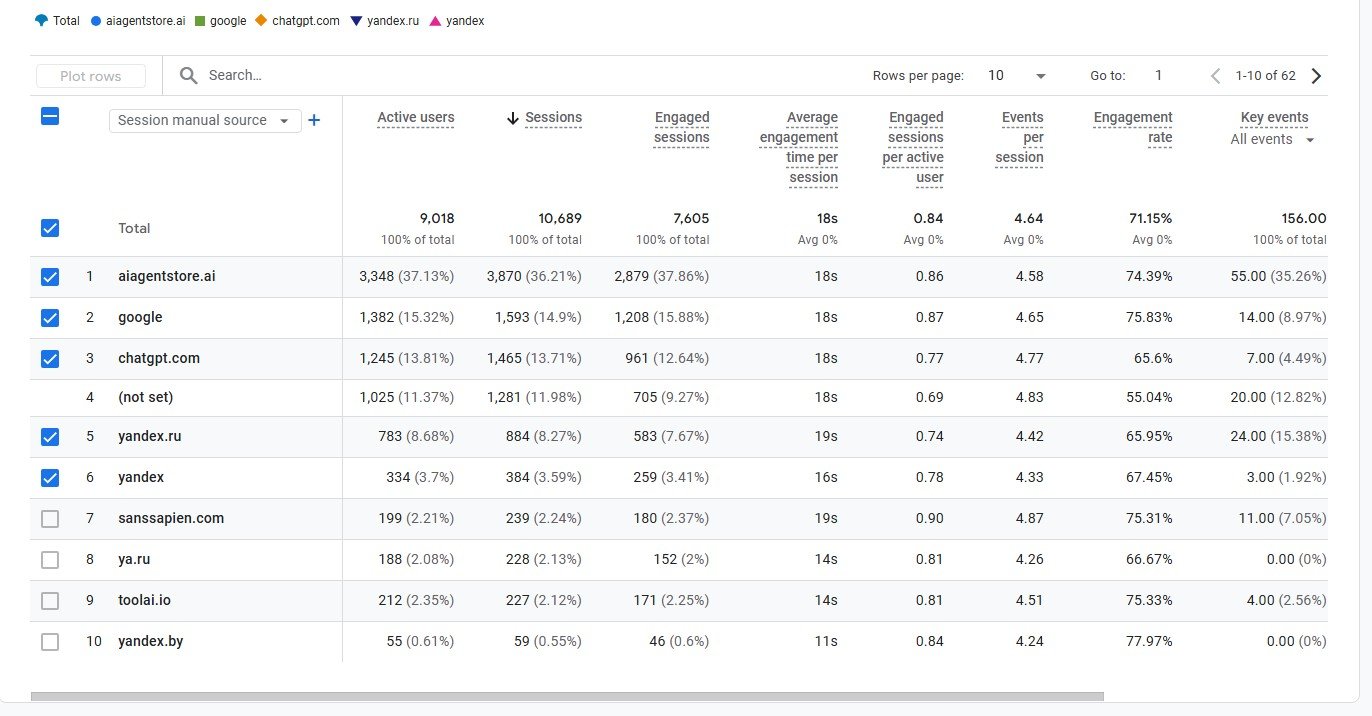
The methodology in one screenshot: 30 days into a client engagement, ChatGPT is the third-largest source of traffic. The tools below are how that happened.
The short version. The best AI tools for generative engine optimization are the ones you’d actually pay for at your stage. For solo operators under $200K ARR, that’s Ahrefs ($129 to 249/mo), Perplexity Pro ($20/mo), Claude or ChatGPT Plus ($20/mo), Google Search Console (free), Bing Webmaster (free), and a manual measurement protocol. Total: $169 to $309 a month. Everything else is either premature or marketing tax.
If you’re shopping for the best AI tools for generative engine optimization, you’ve probably noticed something about the search results: every “best of” list is written by a tool vendor, with their own product at #1.
That’s not useful.
I run Zilwaris, a small AI search content agency for B2B SaaS. I use these tools every week on real client engagements, with real budgets and real outcomes attached. This is what I actually pay for, what I tested and dropped, and what I’d recommend if I were starting from scratch tomorrow at three different budget levels.
No affiliate links anywhere on this page. No “I haven’t used this but it looks great” filler. If a tool isn’t here, it’s because I haven’t worked with it long enough to have a real opinion.
Why this list looks different from what’s on Google
If you ran the same search I did, you saw a familiar pattern: a Profound blog post recommending Profound, a Writesonic blog post recommending Writesonic, a Semrush blog post recommending Semrush. Two Reddit threads with practitioners disagreeing with all three. An AI Overview citing the same enterprise tools as the paid ads above it.
That’s the SERP. Vendors marketing themselves, with the actual buyer voices buried in Reddit comments.
This post doesn’t try to be that. Zilwaris doesn’t sell a GEO tool, so I have no incentive to put one of them at #1. I sell content engagements that use the tools below as inputs. The tools that earn their place earn it because they save me time on real client work, not because I have a referral deal.
If you take only one thing from this post: judge tools by how they fit your actual workflow at your actual budget, not by how many “best of” lists they appear on.
The state of GEO tooling in 2026
The category is young. Most of what gets called a “GEO tool” today is one of three things:
- A traditional SEO platform with a new AI dashboard tab (Semrush, Ahrefs, SE Ranking)
- A standalone AI visibility tracker built in the last 18 months (Profound, Otterly AI, AthenaHQ, Peec AI)
- An AI content generator with a “GEO mode” bolted on (Writesonic, Frase, eesel AI)
Each of these does something useful. None of them do everything. The mistake most people make is paying $500 to $2,500 a month for an “all-in-one GEO platform” before they’ve validated whether they need that level of tracking at all.
Most clients I work with don’t.
Here’s how I actually think about it.
Stack at a glance: which tier are you?
| Tier | Best for | Monthly cost | Core stack |
|---|---|---|---|
| Solo operator | Founders, solo marketers, freelancers running 1 account | $169 to $309 | Ahrefs, Perplexity Pro, Claude or ChatGPT Plus, GSC, Bing WMT, manual measurement |
| Small agency | 4 to 8 client accounts, automation needed | $74 to $214 (on top of solo) | Add Otterly AI, Frase, Mangools AI Search Grader |
| Enterprise | Series B+ SaaS, board-ready reports | $1,000+ | Profound or Semrush AI Toolkit, Rankscale or AthenaHQ |
Pick your tier honestly. Most operators I talk to are at the solo level pretending they need the enterprise stack, then wondering why their tooling bill is bigger than their content output is worth.
The solo operator stack (~$170 a month, all-in)
This is what you need if you’re a founder, a solo marketer, or a freelance content lead doing AI search work for one company. It’s also the foundation I run on for every Zilwaris client, regardless of their tier. Everything else is layered on top.
Ahrefs ($129/mo Lite, $249/mo Standard)
Skip the dedicated GEO trackers and start here.
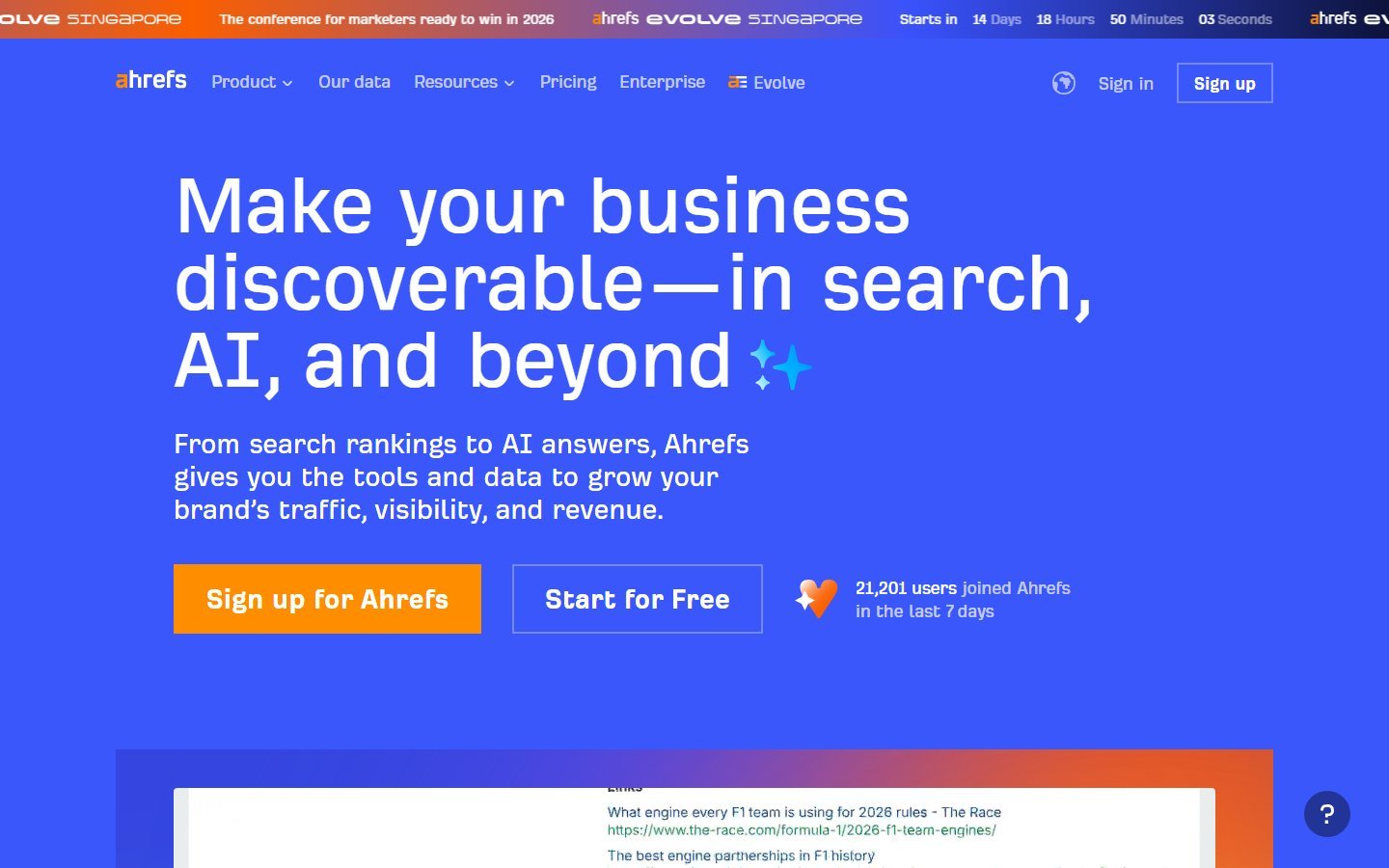
Ahrefs added an AI Overview tracking feature in 2024 that lets me see which of my client’s pages appear in Google’s AI Overviews, which queries trigger them, and which competitor pages are getting cited instead. That’s 70% of what I need to know about a client’s current AI visibility on day one.
The keyword research is the other reason. Every keyword I target on a client site comes from Ahrefs Keywords Explorer. I filter by Keyword Difficulty under 25 and volume over 30, then I look at the actual SERP to see if it’s winnable. That’s the entire opening move on most engagements.
If you don’t have Ahrefs, get it before you get anything else on this list.
Best for: anyone serious about both traditional SEO and AI search. Skip if: you genuinely only need AI citation tracking and nothing else (rare). My take: the single most non-negotiable tool on this list.
Perplexity Pro ($20/mo)
Perplexity is doing something that ChatGPT and Claude don’t: it shows you the full citation chain underneath every answer.
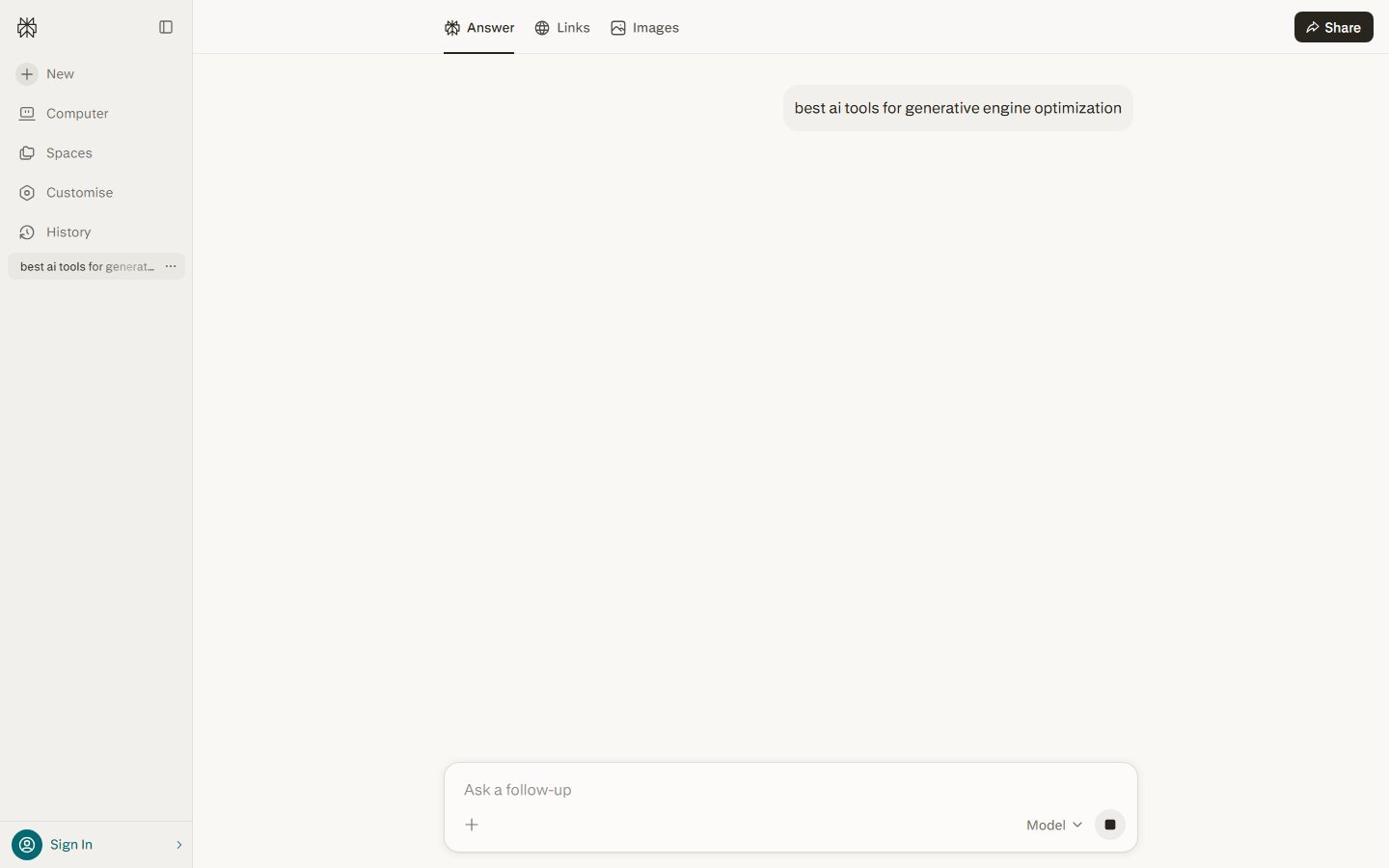
When I want to know which sources the AI engines trust on a specific buyer query, I run the query through Perplexity, click through to each cited source, and look at what makes that page get cited. Word count, schema, named entities, author bylines, structured data, internal linking. That’s the brief for every flagship piece I write.
You can do this on the free tier, but Pro removes the rate limits and lets you compare answers across models.
Best for: citation source intelligence and brief-building. Skip if: budget is critically tight (the free tier covers 80% of the use case). My take: the cheapest tool in this list with the highest leverage per dollar.
Claude or ChatGPT Plus ($20/mo)
Pick one. They’re roughly interchangeable for production work.
I use Claude (and Claude Code) for drafting, research summarization, and structural editing. The advantage isn’t the writing quality. It’s the long context window, which lets me paste a 5,000-word competitor article and ask Claude to identify what’s missing in 30 seconds.
ChatGPT is fine for the same workflow. Don’t pay for both unless you have a specific reason.
Best for: drafting flagship pieces, structural analysis, research synthesis. Skip if: you have an in-house writer who outputs faster than AI. My take: Claude has the edge on long-context work, ChatGPT has the edge on multimodal. Either is fine.
Google Search Console (free)
The most under-rated AI search tool in 2026.
GSC now shows you which queries are sending traffic from AI engines (under “Other” in the Performance report), which pages are getting impressions in AI Overviews, and which queries dropped off after Google’s AI updates. I check it weekly on every client account.
For the click side of the same picture, here is how to track AI search traffic in GA4, including why its native AI Assistant channel undercounts you.
It also shows you something the paid trackers can’t: whether the organic clicks coming through are actually engaging once they land. If your CTR is 11% but your bounce rate is 90%, the headline is overpromising.
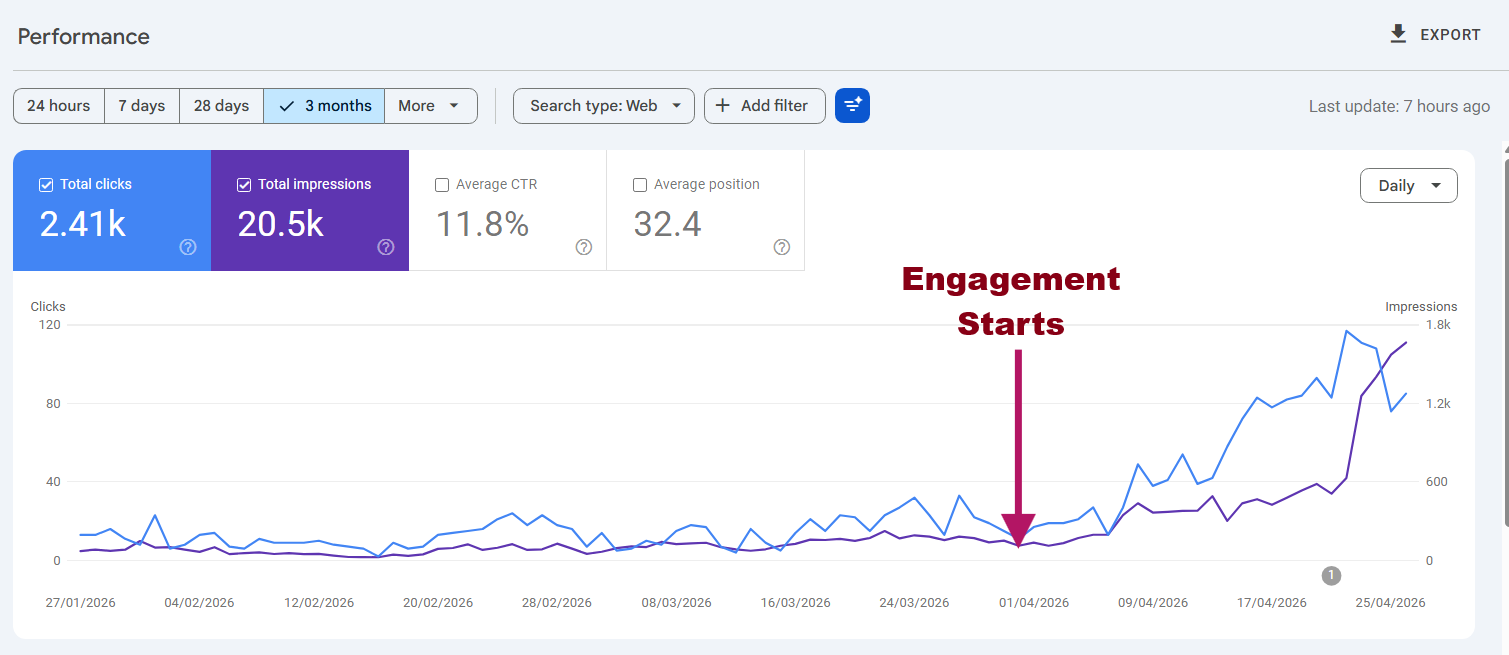
A real GSC chart from one Zilwaris client. The flat line on the left is the pre-engagement baseline. The inflection point is when the methodology started. This is what GSC shows you that the paid trackers can’t.
Bing Webmaster Tools (free)
I check this monthly. Bing’s data is leaner than Google’s, but Microsoft Copilot pulls from Bing, and Bing tends to surface ranking patterns weeks before Google does. Worth the ten minutes a month.
Manual measurement protocol (free, takes time)
This is the discipline that separates serious GEO work from theater.
For each priority query on a client account, I run the prompt three times each on ChatGPT (search enabled), Claude (web search), Perplexity (default mode), and Google AI Overviews. That’s 12 data points per query. I do it once at baseline, then once a month.
LLM responses are non-deterministic. One run is noise. Three runs averaged out is signal. Most paid GEO trackers do one run. That’s why I don’t trust them as the primary source of truth.
This is the CITE Method tracking discipline, written out. It takes thirty minutes per client per month. Worth more than any $300/mo tracker.
I wrote the full version of this protocol up as a standalone guide to measuring AI search visibility: the fixed query set, the runs per engine, and the scoring rubric.
Total solo stack cost: $169 to $309 a month.
That’s it. If you’re below $200K ARR, you don’t need anything else. The six things above will outperform most $1,000+/mo GEO platforms, because the platforms can’t think for you and they all measure with one run anyway.
How these tools work together in a typical client week
Monday morning I open Ahrefs and check the AI Overview report on every active client. Anything new gets flagged. I run the new queries through Perplexity to see who’s getting cited and why.
Tuesday and Wednesday are flagship drafting days. Claude reads the top three competitor pieces I exported, identifies the structural gaps, and proposes an outline. I rewrite the outline in plain language, then draft the piece in the editor, not in Claude.
Thursday is GSC and Bing review. I export the prior week’s queries, look for AI engine referrals (the “Other” bucket in GSC), and compare against what I expected.
Friday is publishing and the monthly measurement run, if it’s the right week. The manual three-runs-per-engine protocol takes thirty minutes per client and produces the only measurement data I trust.
The tools don’t make the work happen. They make it faster. If I had to do the same work without them, I could, on twelve hours a week instead of six.
The small agency stack (~$75 to $215 a month, on top of the solo stack)
Once you’re running four or more client accounts, the manual measurement protocol stops scaling. Each client takes thirty minutes a month plus eight to ten hours of analysis. At five clients, that’s a half-day of work just for measurement.
This is when paid trackers start earning their place.
Otterly AI ($29/mo entry, $99/mo team)
The entry-level AI visibility tracker I’d actually recommend.
Otterly tracks where your brand appears across ChatGPT, Perplexity, Gemini, and Google AI Overviews. The dashboards aren’t fancy and the reports are basic, but the data is real and the price is fair for an agency just starting to add tracking automation.
Buy this when manual tracking gets painful. Don’t buy it before.
Best for: small agencies running 4 or more accounts. Skip if: you have fewer than 4 clients (manual measurement is still cheaper). My take: the only entry-tier AI tracker that earns its $99/mo. Buy it when manual measurement starts costing more time than the tool costs in dollars.
Mangools AI Search Grader (free for now)
Mangools released a free AI Search Grader in early 2026. It scores a single URL across 30+ AI search signals: structured data, named entities, answer-shaped content, citation potential.
I run new client URLs through it during onboarding. Five minutes of analysis tells me whether their existing content is engineered for citation or just for ranking. It’s a useful diagnostic that costs nothing.
Frase ($45/mo Solo, $115/mo Team)
I added Frase about eighteen months ago and it’s earned its place. Frase does one thing well: it pulls the top 20 results for a target query and tells me which subtopics, named entities, and questions appear most frequently across those pages.
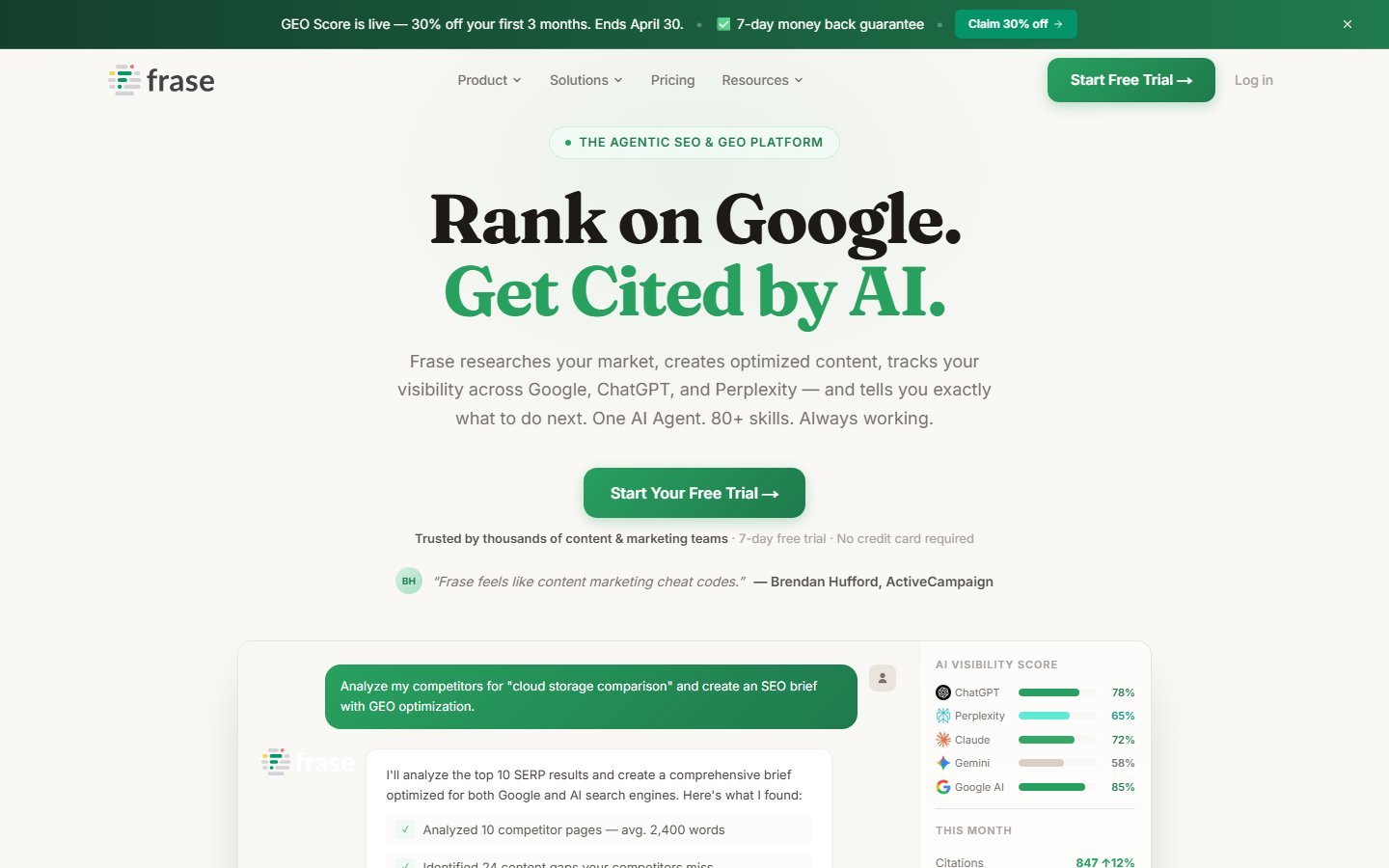
That output goes into every flagship brief. Faster than doing it manually, and it catches patterns I’d miss by skimming.
It’s not a GEO tool by name. It’s an SEO content optimization tool that happens to give you exactly the structural intelligence you need to write content that gets cited by AI engines.
Best for: anyone writing 4 or more flagship pieces a month who needs faster brief-building. Skip if: you only publish 1 or 2 pieces a month (manual SERP analysis is fine at low volume). My take: the structural intelligence Frase surfaces is exactly what makes content rank in AI search, even though no one calls it a GEO tool.
Rank tracking via Ahrefs or Mangools (no extra cost)
If you’re already paying for Ahrefs or Mangools, you have rank tracking built in. Don’t buy a dedicated rank tracker on top of either one.
Total small agency stack: roughly $74 to $214 a month on top of the solo stack.
This tier handles four to eight client accounts comfortably. Past that, you start needing one of the enterprise tools below.
The enterprise stack ($1,000+ a month)
This tier exists for one reason: large clients want comprehensive tracking dashboards they can show executives. The data isn’t necessarily better than what you can get manually, but the reports look professional and integrate with broader marketing dashboards.
Profound ($999/mo entry, custom enterprise)
Profound is the most-cited tool in this category for good reason. They track brand mentions across every major AI engine, show share-of-voice trends, and benchmark against competitors. The dashboards are clean and the API integrations are solid.
Should you buy it? If you’re running GEO for a Series B+ SaaS company with internal stakeholders demanding monthly board-ready reports, yes. The price tag pays for the executive credibility.
If you’re a $500K to $5M ARR client, no. You’re paying for dashboards your team will skim once a month. The same data, manually pulled, will tell you the same story for $150/mo of operator time.
Best for: Series B+ SaaS companies needing board-ready AI visibility dashboards. Skip if: you’re under $5M ARR (the dashboards pay for executive credibility, not better intelligence). My take: most-cited tool in the category for a real reason, but the price is a poor fit below enterprise scale.
Semrush AI Toolkit ($249/mo or higher tier)
Semrush bolted an AI Toolkit onto their existing SEO platform in 2025. It tracks AI visibility across major engines, integrates with their keyword research and content audit tools, and lets you compare AI rankings to traditional SEO rankings side by side.
If you’re already paying for Semrush for traditional SEO, the AI Toolkit is a useful add-on. If you’re not, don’t switch from Ahrefs to Semrush just for the AI features. They’re roughly equivalent in usefulness.
Best for: existing Semrush users adding AI search to a working SEO program. Skip if: you’re already on Ahrefs (don’t switch just for the AI features). My take: a competent add-on, not a reason to change platforms.
Writesonic AI Search Visibility ($29 to $499/mo)
Writesonic positions itself as the all-in-one GEO platform: content generation, visibility tracking, optimization scoring. The content generation is fine. The visibility tracking is fine. Neither is best in class.
The pitch is “everything in one tool.” The reality, from running it on three client accounts, is that the dedicated tools (Ahrefs for tracking, Frase for optimization, Claude for drafting) do each job better. I cancelled Writesonic after four months.
Best for: teams that prefer one tool and accept “fine” instead of “best in class.” Skip if: you’d rather use the best tool for each job. My take: I cancelled it after four months. Dedicated tools win every time.
Rankscale, AthenaHQ, Peec AI (each $99 to $300/mo)
I’ve tested all three on at least one client. Each is genuinely good at AI citation tracking. None is differentiated enough from Otterly AI to justify the higher price for a small operator.
If you’re at the tier where you’re choosing between Otterly and one of these, the differentiator is integration depth and reporting polish, not data quality. Pick the one whose reports your client will actually read.
Best for: clients whose stakeholders specifically prefer one of these tools’ reporting style. Skip if: you don’t have a specific reason to choose them over Otterly AI. My take: all three are fine. None is differentiated enough to justify the higher price for a small operator.
GEO tracking, checker, and analysis tools, compared
Most searches for generative engine optimization software are really asking for one of three different jobs. The tools are sold under the same label, but they do not do the same thing, and buying the wrong kind is the most common waste I see.
Tracking answers “is AI naming us, and is that changing?” It runs the same buyer questions through ChatGPT, Perplexity, Gemini, and Google AI Overviews on a schedule and records who gets named. Checking answers “can an engine read and quote this page?” It scores one URL for structure, entities, and answer-shaped content. Analysis answers “why is a competitor named instead of us?” That means reading the sources the engine cites, which no tool fully automates yet.
| Job | Tools on this page | Price | When it is worth it |
|---|---|---|---|
| Tracking, entry level | Otterly AI | $29 to $99/mo | Four or more brands to watch, or a stakeholder who needs a monthly chart |
| Tracking, mid tier | Rankscale, AthenaHQ, Peec AI | $99 to $300/mo each | Your client prefers one of their reporting styles |
| Tracking inside a suite | Semrush AI Toolkit, Writesonic AI Search Visibility | $29 to $499/mo | You already pay for the suite |
| Tracking, enterprise | Profound | $999/mo and up | Large brands that need share of voice and competitor benchmarks across every engine |
| Checking one page | Mangools AI Search Grader | Free | Onboarding a new site, or before publishing a flagship page |
| Analysis of cited sources | Perplexity Pro plus the manual protocol above | $20/mo | Always. This is where the fixes actually come from |
The order matters. A tracker tells you that you are missing, and a checker tells you a page is readable, but neither tells you why the engine picked someone else. That answer lives in the sources the engine cites, which is why the analysis row is the one I would never skip, and why one tracker is enough for almost everyone.
Best for: deciding what kind of GEO tool you actually need before comparing brands. Skip if: you track fewer than four brands, because the manual protocol above does the tracking job for free. My take: buy one tracker at most, use the free checker, and spend the rest of the time on source analysis.
Tools I don’t use, and why
Worth saying out loud.
All-in-one GEO platforms below $200/mo. Most of them are twelve to eighteen months old and the feature set isn’t mature yet. By the time they’re production-ready, the price will be higher. Wait.
Dedicated AI content generators with “GEO mode.” The “GEO mode” is usually a prompt template that tells the AI to write in a more answer-shaped format. You can do this yourself with a Claude or ChatGPT prompt. Don’t pay $99/mo for a wrapper.
Profound at the solo tier. $999/mo is less than a third of what a Zilwaris client pays for a full content engagement. The math doesn’t work for solo operators.
Most rank trackers built specifically for ChatGPT. ChatGPT’s outputs are non-deterministic. A “rank tracker” that runs the query once and reports a position is reporting from a coin flip. Until they run statistical sampling across runs, the data is decorative.
Most “AI SEO audit” tools. They scan your site for schema markup, meta tags, and H1 structure. That’s a checklist you can run yourself in twenty minutes. Save the $50/mo.
Related: If you want the actual audit those tools claim to do, written so you can run it manually in an afternoon, see how to run your own AI search visibility audit. Twenty buyer prompts, four engines, free Google Sheet template.
Frequently asked questions
What is the best free GEO tool?
Google Search Console, full stop. It tracks AI Overview impressions, AI engine referral traffic (under “Other” in the Performance report), and per-query click data on every owned page. Pair it with Bing Webmaster Tools (also free) for early Microsoft Copilot signals. Together they cover most of what a $99/mo entry-tier GEO tracker will tell you.
Is Profound worth $999 a month?
Only if you’re running GEO for a Series B or later SaaS company that needs board-ready dashboards. The data isn’t meaningfully better than what I get manually. The price tag pays for the executive credibility, not the intelligence. For founders, freelancers, or agencies under five clients, it’s the wrong tier of spend.
Do I need a dedicated AI visibility tracker?
Not until manual tracking starts costing you more time than the tool costs in dollars. For one to three accounts, the manual three-runs-per-engine protocol takes thirty minutes per client per month and produces more reliable data than any single-run tracker. Past four clients, look at Otterly AI ($29 to 99/mo) before anything pricier.
What’s the difference between an AI search tracker and an SEO tool?
SEO tools (Ahrefs, Semrush, Mangools) measure where your pages rank in Google’s blue links and AI Overviews. AI search trackers (Profound, Otterly AI, Peec AI, AthenaHQ) measure where your brand gets cited inside ChatGPT, Perplexity, and Gemini answers. They overlap, but they answer different questions. You need both signals to know if your work is moving the needle.
Can I use ChatGPT or Claude as a GEO tool?
Yes, and I do. They’re the cheapest, most powerful diagnostic tools on this list. Run your priority queries through them three times each, log where you and your competitors appear in the answers, and you have a free citation baseline. The “tool” most paid platforms charge for is automating exactly this workflow.
How much should a B2B SaaS company spend on GEO tools each month?
If you’re running GEO yourself: $169 to $309/mo on the solo stack, no more. If you’re hiring an agency, the agency should already cover its own tooling out of its retainer. Don’t pay an agency $3,000/mo and then $1,000/mo on tools the agency uses to deliver the work. That’s double-billing.
Is generative engine optimization the same as SEO?
No. Traditional SEO optimizes for ranking in Google’s blue-link results. Generative engine optimization optimizes for being cited inside the answers AI engines generate. Different surfaces, different ranking factors, different content forms. They overlap and reinforce each other when run together. Neither replaces the other in 2026.
The Zilwaris stack, in one paragraph
This is what I actually run for every paying client right now:
- Ahrefs Standard ($249/mo): keyword research, AI Overview tracking, competitor analysis
- Perplexity Pro ($20/mo): citation source mapping, AI engine reconnaissance
- Claude Pro ($20/mo): drafting, research, editing. Claude Code is included.
- Google Search Console (free): owned-content indexation and click data
- Bing Webmaster Tools (free): early Microsoft Copilot signals
- Frase Team ($115/mo): content brief intelligence
- Otterly AI Team ($99/mo): automated AI visibility tracking
- Notion ($10/mo per member): per-client tracking workspace
- Loom ($15/mo): monthly walkthrough videos for clients
- PayPal (free): invoicing
Monthly tooling cost: roughly $528.
I deliver six pieces of content per month per client at $3,000. The math works.
If you want this stack run on your B2B SaaS account by someone who actually uses every tool above for paying clients, that’s what Zilwaris does. One flat rate of $3,000 a month, on a six-month initial term, then month-to-month. Limited to 5 active clients.
Or read the full methodology and run the stack yourself. The CITE Method is documented publicly because the methodology is the product, not a secret.
The first published case study shows how a 30-day engagement with one client made ChatGPT the third-largest traffic source on the site. Same stack, same protocol.